
After hours
Mixes, books, recipes, and the headwinds and tailwinds I keep coming back to. None of it is work. All of it is fun.
Mixes I've recorded
Every so often I record a mix at home and post it to SoundCloud. Mostly electronic, more jazz lately, which is hard to mix. Good to work to, and hopefully they get you into the zone.
Recent books I've read
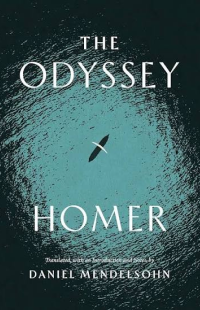
The Odyssey↗
by Homer, Daniel Mendelsohn
Nolan's movie was amazing, but so different than what I remembered, I had to refresh my memory.
Blitzed↗
by Norman Ohler
Reads very smoothly. Quite a surprising take on what "powered" Nazi Germany during the war.
Tripped↗
by Norman Ohler
Reads also pretty smoothly. About how the drug experimentation of WW2 leaked into American culture.
We All Shine On↗
by Elliot Mintz
Fun to read, but even more fun to listen to. Elliot's voice is hypnotizing. Also... Lennon stories!
From a Certain Point of View↗
by Multiple Authors
Fun Star Wars book filled with short stories. Some better than others. My fav is about the Cantina band.
Basic Economics↗
by Thomas Sowell
Even if you're well-versed in economics, this book is worth reading. Sowell has a rare talent for explaining even the basics in a way that always offers something new to learn.
Starter Villain↗
by John Scalzi
Easy and fun to read. At times, it’s a bit too obvious and my suspension of disbelief is broken, but it’s still enjoyable enough to keep going.
The House of Morgan↗
by Ron Chernow
Fascinating look into the human aspect of how we perceive money today. Not my favorite Chernow book though, it focuses on multi-generations vs an individual.
George Washington↗
by Ron Chernow
I'm a sucker for historical biographies, and this one is no exception. Chernow is able to inject humanity into an otherwise (justifiably) idolized, larger than life leader.
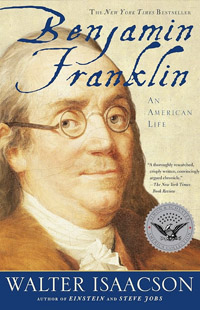
Benjamin Franklin↗
by Walter Isaacson
I struggle with Isaacson's writing, but Franklin's life was so interesting that I powered through it. The book shows how his personality was baked into our country's DNA.
Grant↗
by Ron Chernow
A well-written, detailed account of a good but flawed man and the pivotal roles he played. Fascinating to learn how his triumphs and failures reverberate to this day.
Alexander Hamilton↗
by Ron Chernow
My favorite Chernow book of my favorite founding father. A flawed genius that without him we would not be the country we are today.
The Hidden Life of Trees↗
by Peter Wohlleben
A fun book about trees. Yup. Trees. Admittedly I knew nothing about trees before reading and now I have a new found respect for their dynamic social lives. Who knew?!
 Currently reading









Recent recipes
Greek Protein Egg Cups
2026.07.23
Grilled Sirloin Tip Skewers
2026.07.07
Mediterranean Sheet Pan Seafood Medley
2026.06.30
Garlic-Ginger Seafood Medley Stir-Fry
2026.06.30
Headwinds & tailwinds
Laws, principles, and concepts I reach for when I'm stuck. All of them are inevitable, and all of them are a choice: headwind or tailwind.
The layout of this section was inspired by the wonderful Laws of UX.
Dunbar's Number
Dunbar's Number puts a cap on how many stable relationships you can comfortably maintain and manage: about 150. It's a sweet spot for ensuring quality personal connections and a fascinating insight into the evolution of the human brain.
Conway's Law
Your organization's structure doesn't just shape your meetings; it shapes your products. Conway's Law observes that systems are mirrors of the organizations that create them, reflecting how teams interact and organize.
Chesterton's Fence
Hesitate before you remove that 'obsolete' fence or feature. Chesterton's principle is a reminder to respect the wisdom of why things are as they are before making changes - because context is king.
Hanlon's Razor
Assume ignorance over malice. Hanlon's Razor guides us away from conspiracy theories and towards more benign explanations for mistakes and shortcomings.
Occam’s Razor
The simplest explanation is often the correct one. Occam’s Razor is a beacon for problem solvers, slicing through unnecessary complexities to reveal the most straightforward solutions.
Pareto Principle (80/20 Rule)
Efficiency is key, and the Pareto Principle guides us to focus on the 20% of efforts that yield 80% of results. It's a principle that champions strategic focus across businesses and life.
Tesler’s Law
Complexity has a conservation law, too. Tesler’s Law tells us that there's an inherent complexity in every system, which can be managed but not eliminated.
Dunning-Kruger Effect
Here's a twist: those just starting often overrate their skills, while experts underrate theirs. The Dunning-Kruger Effect isn't just about confidence; it's a call to seek constant learning and self-reflection.
Gall's Law
In system design, start simple. Gall's Law advises that complex systems evolve from simpler ones that work, offering a roadmap for sustainable growth and innovation.
Hick’s Law
Decisions slow down with too many options. Hick's Law quantifies this delay, reminding designers to streamline choices for better usability.
Jakob’s Law
Familiarity breeds contentment in web design. Jakob's Law notes that users prefer websites that behave like the rest of the web they know, pushing designers towards intuitive user experiences.
Law of Proximity
Our minds group things that are close together, an insight known as the Law of Proximity. It's a principle that informs how we visually navigate and organize information.
Miller’s Law
Our working memory prefers the magic number seven, give or take two. Miller's Law suggests keeping things manageable, whether it's UI elements or chunks of information.
Goodhart's Law
When a measure becomes a target, it loses its measuring stick. Goodhart's Law warns of the distortions that arise when we optimize for specific metrics at the expense of broader goals.
Parkinson's Law
Work expands to fill the time available. Parkinson's Law is a wry observation that challenges us to work smarter, not longer.
Postel’s Law
Be conservative in your actions and liberal in what you accept from others. Postel's Law is about robustness and resilience, encouraging us to build systems that accommodate variability while maintaining integrity.
Hofstadter's Law
It always takes longer than you expect, even when you take into account Hofstadter's Law. It's a humorous nod to the complexities of project timelines.
Theory of Constraints
Every system has a bottleneck. The Theory of Constraints is about identifying and addressing that limiting factor to improve performance effectively. It’s a principle that can transform the efficiency of any process.